Simmering Into Summer

July comes in simmering, steaming, scorching, sweltering  - all the alliterative “S” words for summer. After a long period of gloriously moderate weather in June, summer has galloped in and raised high a banner of blazing sunlight.

I find myself moving through life a lot more slowly in the summer, do you? When it’s hot, I allow myself to give in to the torpor, to sit quietly in the shade of a tree with my eyes closed, taking shallow breaths, listening to the birds and squirrles chattering. Just now through the window from where I sit typing these words to you, I spy a chipmunk rooting around in the damp soil surrounding the impatiens in my flower bed, and I stop to watch him while he scratches and scrabbles, then sits up on tiny haunches for a nibble, found treasure gripped tightly in two tiny foreclaws. Yes, he’s a nuisance in the garden, but I can still find him delightful to watch.

As energy lessens in the summer, so does appetite. Breakfast nowdays is often a small bowl of fresh fruit, maybe a bit of yogurt on top. Lunch a scoop of tuna or chicken salad with some wheat crackers; dinner a bit of salmon or grilled chicken and a big green salad. Easy peasey – to make, digest, and clean up.

Of course, all day, lots of cold, filtered water.
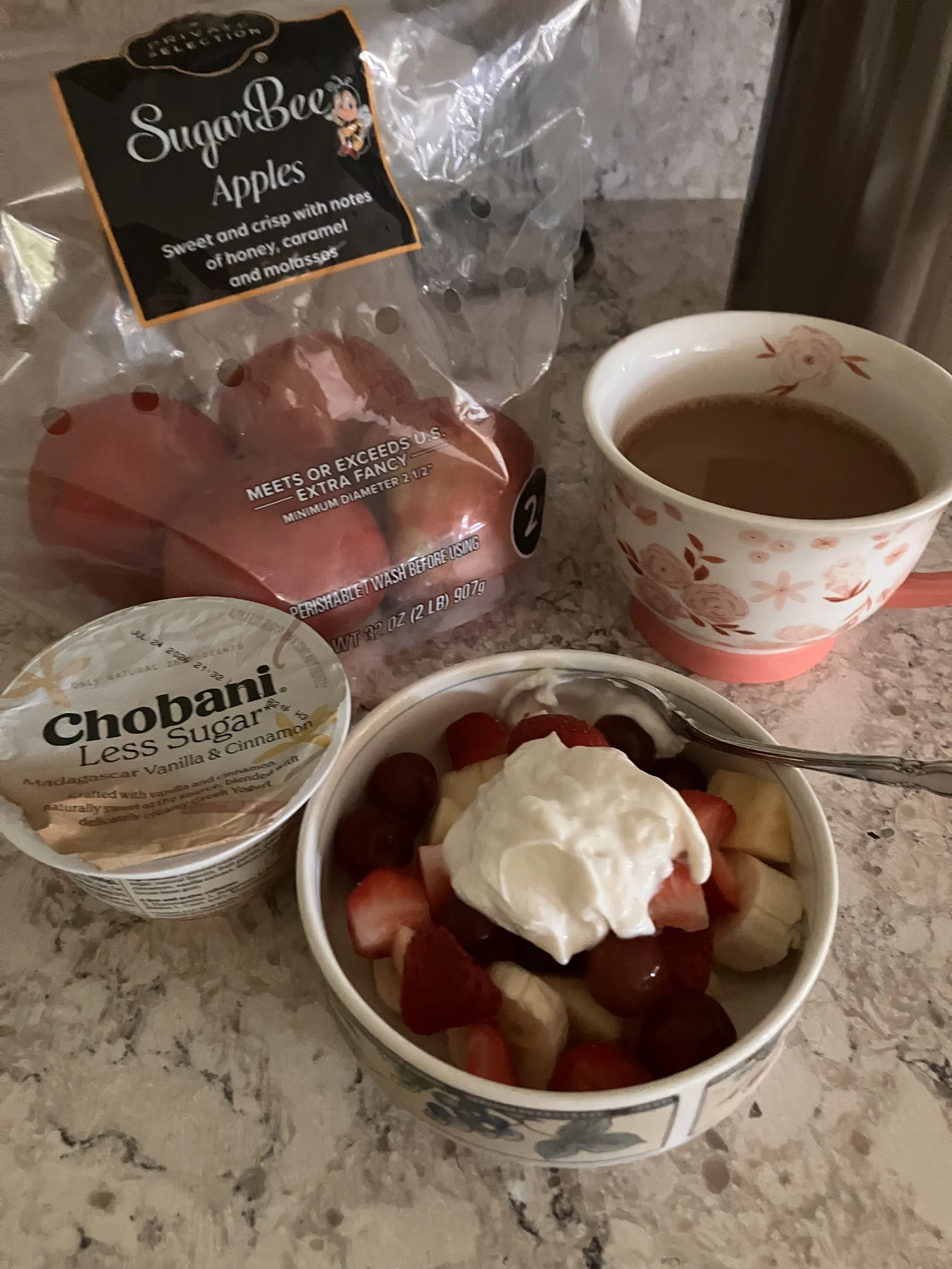
Simple and so good summer breakfast.

I have taken up a new habit – one of dubious goodness for health and fitness, but I’m enjoying it anyway. After decades of drinking my coffee black, I’ve started treating myself to a second cup in mid-morning laced with vanilla almond milk creamer in what I’m calling a “two-fisted mug.” The sweet creamy coffee is delicious; but there’s also something truly satisfying about cupping my two hands around this mug – it really feels like a bowl – and tipping it up to my mouth.

Something about the holding of this cup between my two palms connects to a question that keeps rising for me in the living of these days.

How do I – do we – HOLD all of it? All that life offers in grace and glory, but also in grief? I return to an ancient memory of a record I used to play as a child (He’s Got the Whole World in His Hands) and on the jacket cover, an image of two large hands cupped around the earth, holding it tightly between them. There is safety, but also offering in this image. Here, it invites, this is for you in all its fullness. Put your hands on top of mine, and together we can hold every bit. I imagine the hands of my dearest community of family, friends, ancestors, layered on mine; I feel my palms warm and tingle with possibility, with strength, with good willful energy.  

Usually I mark the beginning of a new month by setting up a new Notebook – one of the old-fashioned spirals I use for a daily journal. I write the month and year on the inside cover; what I plan on reading; and also those questions I’m holding and want to consider about life in general and my own in particular.

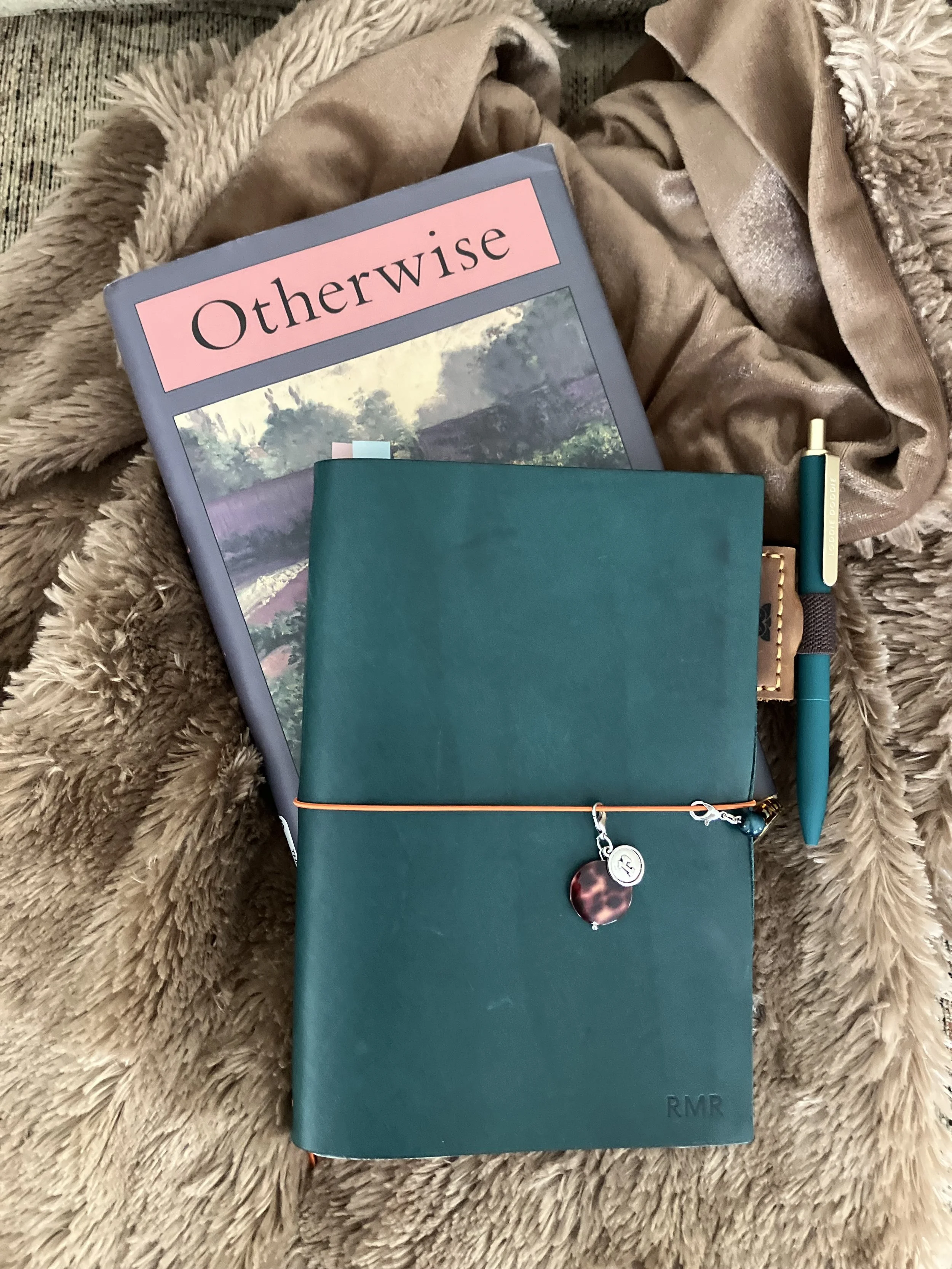
Today I’m reorganizing my Paper Republic notebook system. I’ve been using the Paper Republic for three months, and I still absolutely adore it. It’s a sensory pleasure to hold, to touch, to write in, something I find satisfying in its form quite apart from its function – quite like that coffee bowl I was just telling you about, yes?

I use the Paper Republic for reflections about my reading and writing life; notes on books I’ve read, poetry, podcasts with authors I listen to. I’m adding a new notebook to the mix this month exclusively for notes on the Substack posts I read. Having noticed I’ve been skimming and scrolling through those without closely reading them, I’m hoping this will slow me down and encourage a more thoughtful approach to the very fine writers whose work I follow. Also, it gives me another reason to write in this journal I love, and turns reading on a device into a more tactile experience – something else I find myself craving lately.
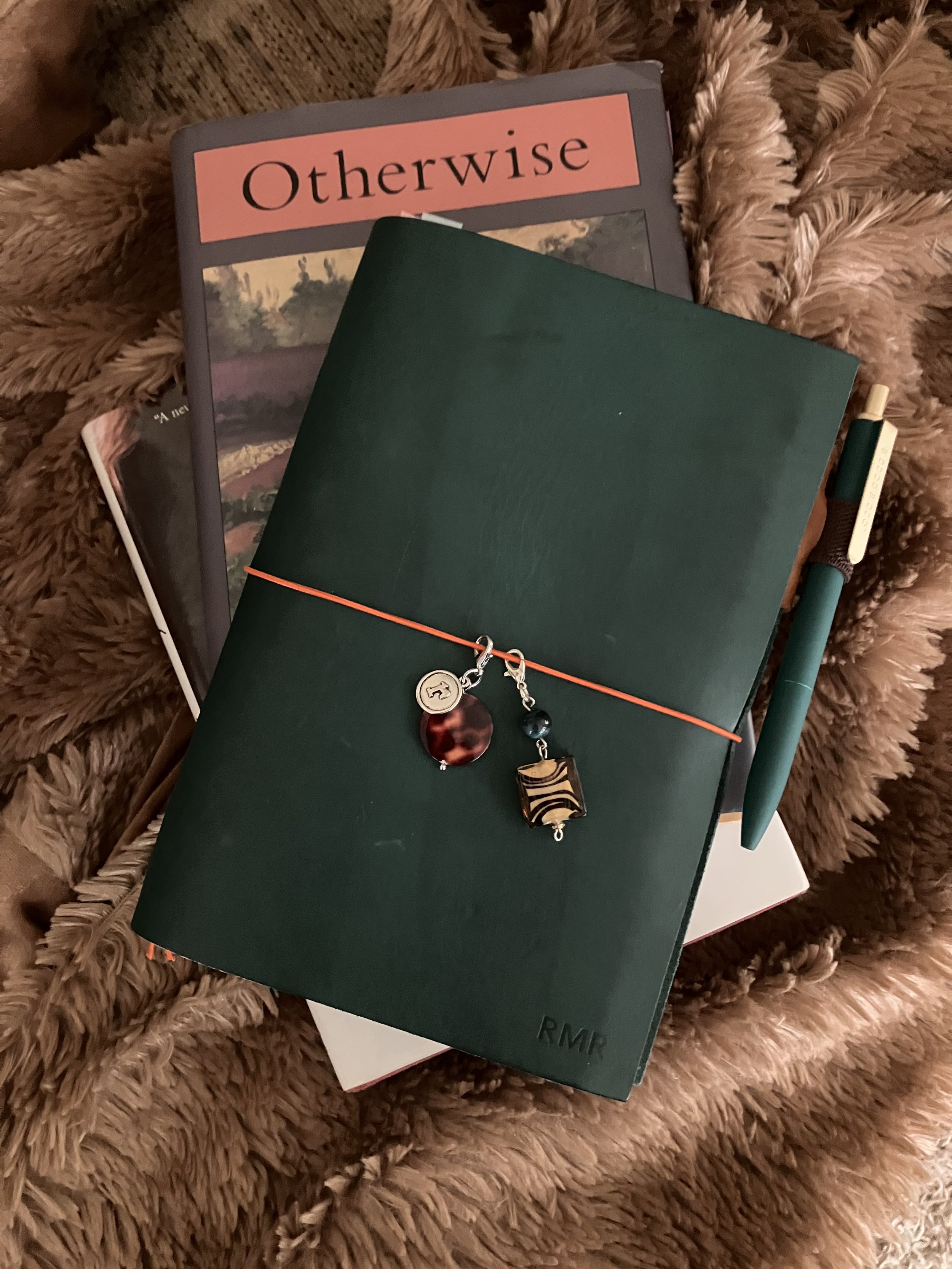
How I love my Paper Republic journal system

Last month’s poetry study was the work of Marie Howe, specifically, her New and Selected Poems. Every month I turn to a new poet with a mix of excitement but also sadness. This immersion into a poet’s work and life, reading their poems, memorizing a couple, taking those with me throughout the day, listening to interviews and podcasts with the poet – a relationship develops, and it’s one I feel some tenderness around leaving behind.

But, this month, as has happened every month so far, I quickly become attached to this new poet I’ve chosen, coming to know her through the words she writes, but also through interviews and videos I may find online.

As we’ve been speaking of holding and containers, these words of Howe’s come to mind. “Poetry holds the mystery of being alive,” she said, “holds it in a kind of basket of words that feels inevitable, incantatory; that has the quality of a counter spell. Poetry holds what can’t be said.”

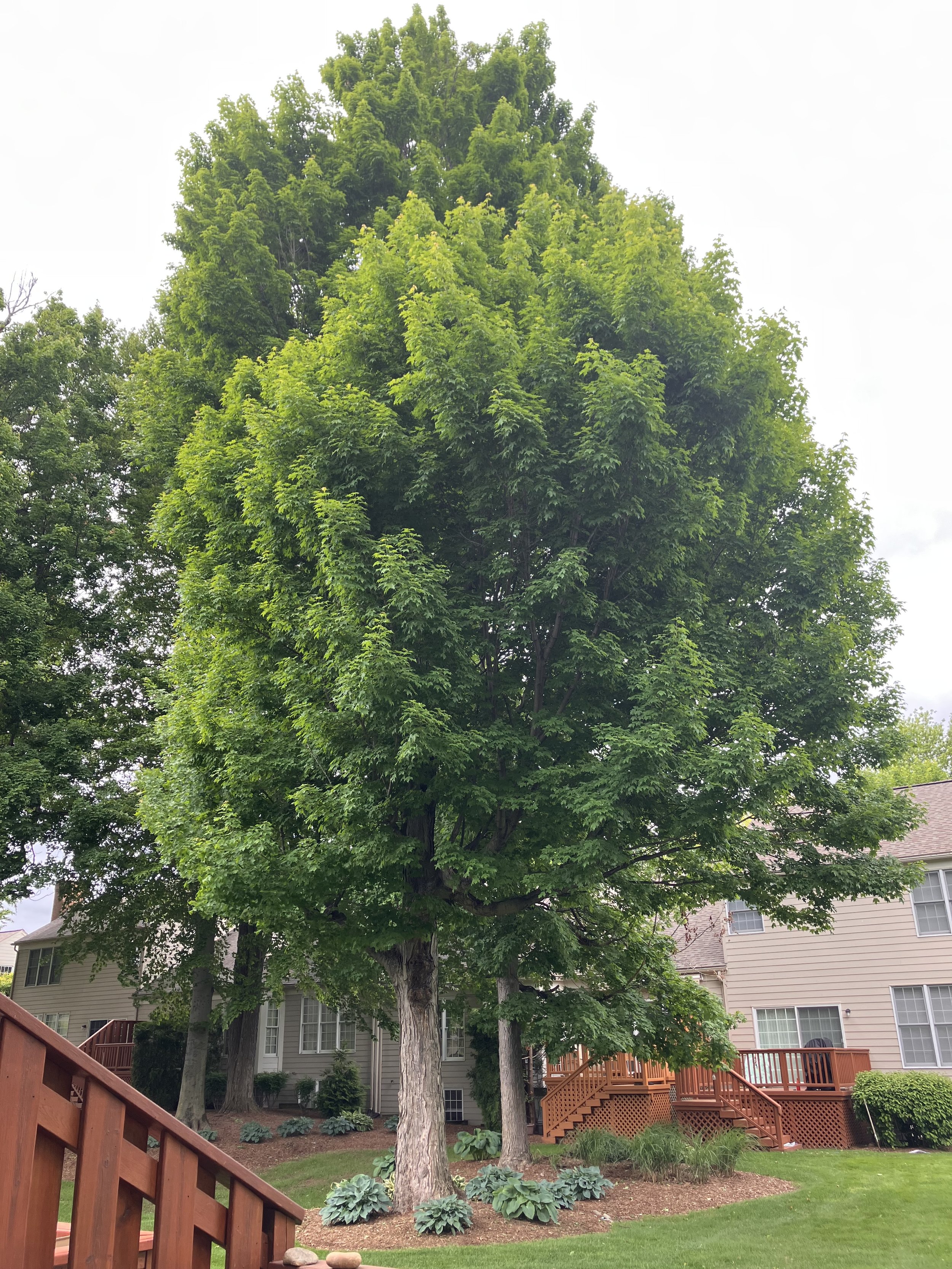
One of the poems I chose to memorize is called The Maples, and when I read the first line I knew I had to memorize it. I asked the stand of maples behind the house/How shall I live my life? They said, Shhh, Shhh, Shhh.

Right behind my house is just such a stand of maples, and whenever my back door is open, I hear that same answer: Shhh, shhh, shhh. It was so easy to memorize that poem, because I live it every day, every time I stand still on my back porch. And now I can recite this poem in their honor.
The Maples


The Maples

I asked the stand of maples behind the house

How should I live my life?

They said, shhh, shhh, shhh…

How should I live? I asked, and the leaves seemed to ripple and gleam.


A bird called from a branch in its own tongue.

And from a branch, across the yard, another bird answered.

A squirrel scrambled up a trunk

then along the length of a branch.


Stand still, I thought.

See how long you can bear that.

Try to stand still, if only for a few moments.

drinking light   breathing.

Some other things I loved in June:

The Calamity Club, a summer blockbuster, all 649 pages of it. Read it with a big glass of iced tea with mint, and a box of tissues (better yet, an old-fashioned lace handkerchief). I read most of it in the shade of early morning on my back porch, listening to the maples (and birds and chipmunks).

These You Tube videos by Caroline Chagnon, that really invite me to slow down, and create beauty in my everyday living.

My flower garden, that’s flourishing and offers daily delight to my eyes and good work for my hands.

 So tell me, what are you holding for this month of July? Are there hard things you might hope to set down? What is flourishing that you’d like to hold tightly and safely? How are you holding it all right now?
 

Considering the World and its Questions...

The world asks as it asks daily

And what can you make, can you do, to change my deep-broken, fractured?

~from Counting, New Years Day, What Powers Yet Remain to Me, by Jane Hirshfield


That’s quite a question, isn’t it?

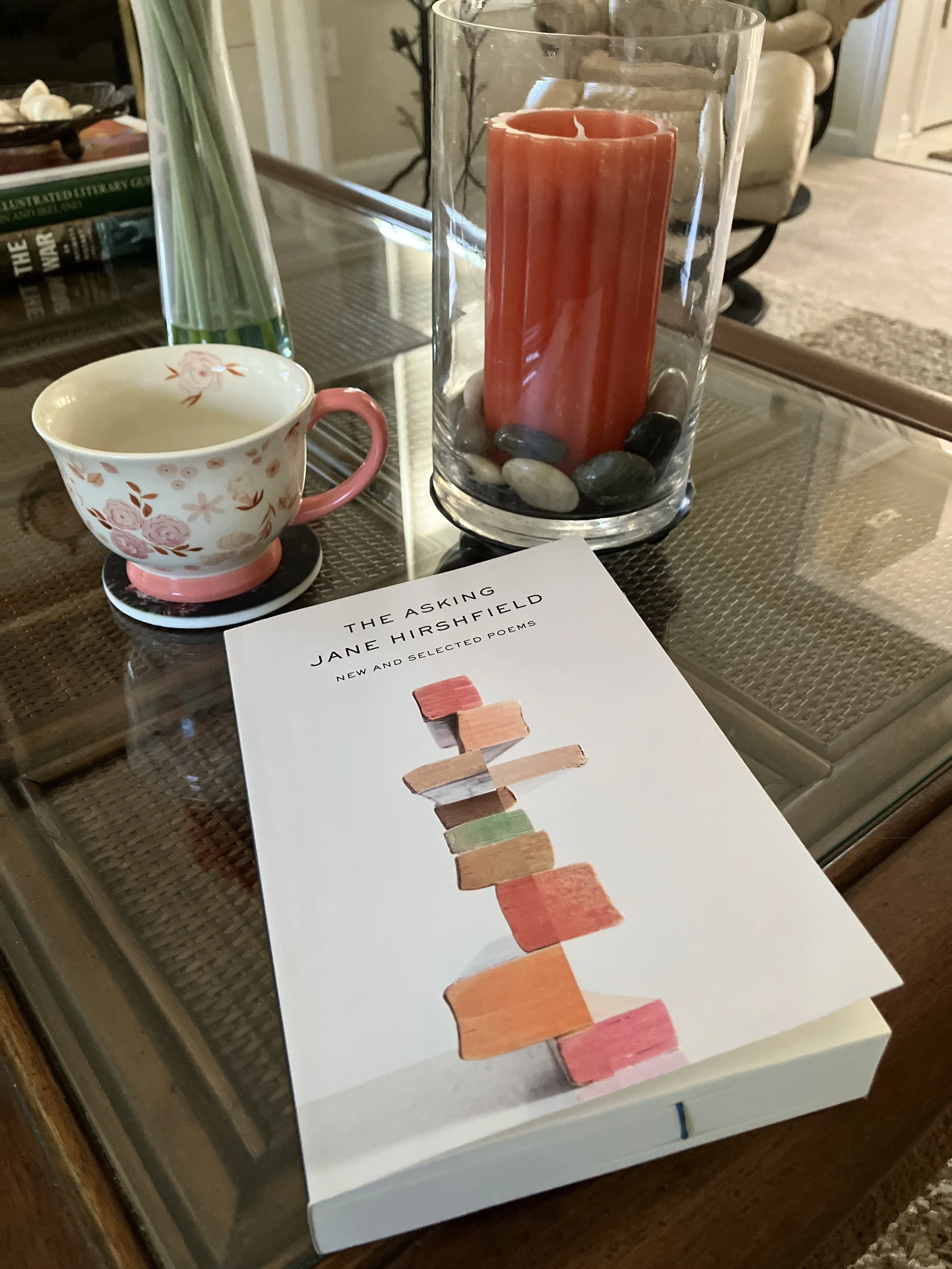
Poet Jane Hirshfield asks it at the top of a new poem from her latest book, The Asking. As I walked with this poem last month, I found myself reflecting on big questions like this one, especially as I think about ways to respond to the living of these days.

Hirshfield’s poetry seems committed to bringing these questions to light. It’s unique among the poetry I’ve been reading in the ways she integrates the deeply personal with the fullness of our existence - history, art, the natural world, the cosmos even – and not just within our human selves.

And yet, she often brings those big questions right back to human size, so we can consider, can ask, what can we do?

For the past decade, I’ve struggled with the weight of the world’s failing, trying to hold inside the despair, anger, and fear that somethings threatens to overwhelm me. But at the same time, becoming one who is porous to joy and beauty, who is of an age to know that the wonders of life in the world are plenty but also fleeting. I want to soak them up, savor them, protect them from deep fractures.

Hirshfield’s poems, and this one in particular, have invited me to put those two halves of myself together, and to see the value in responding to all of it from the wholeness of my truest, human self.

Which invites me to ask another question, another big question...what does this look like in the practical world of my life in the year 2026? How do I carry this intention into the living of every one of my days?

I take my cue from Hirshfield, and what she names as the “powers yet remaining to her.”

I have a mountain, a kitchen, two hands.

Can admire, with two eyes, the mountain

Actual, recalcitrant, shuffling its pebbles, sheltering foxes and beetles.

Can make black eyed peas and collards

Can make, from last years late-ripening persimmons, a pudding

Can climb a stepladder, change the bulb in a track light.

Look how she roots her power in the stuff of everyday life. The mountain outside her window. The kitchen where she makes food. Two hands she can turn toward making a home. Or a poem.

These are the things I can do, too - things I already do every day. On a morning walk, feasting my eyes on the beauty of nature, relishing the sun’s radiance on my face, feeling my heart swell with love for the little dog prancing beside me, sharing a meal with people I love. This is how I ground myself in goodness, beauty, hope – because to do these things is to believe in life and all its wonderous unknowing.

Still, like me, Hirshfield doubts. She wants, needs to do more. Every day for years she wakes to the mountain, wakes to the question, and still the feet of the new sufferings follow in the feet of the old.

Again, she offers the basic elements of her life to the world’s altar.

I brought salt, brought oil to the question. Brought sweet tea.

Brought postcards and stamps. For years, each day, something.

I think of my own miles walked in all kinds of weather. Gallons of coffee consumed and sweet breads baked. Letters written, phone calls made, placards carried. Despite these efforts, there were no miracles.

Stone did not become apple. War did not become peace.

Each day, for years now, a bowl of coffee cupped between my two hands I steel my heart against news of the day’s fresh disaster.

But wait. There are, despite it all, graces to notice and name.

Yet still joy stays joy. Sequins stay sequins. Words still bespangle

bewilder.

Yes. I rejoice in hearing my grandson playing the piano, a song he has composed, a song so deeply of his soul that tears fall from my eyes. New diamonds in my anniversary ring will sparkle in the sunlight coming through the windshield. Poems and books can move me deeper into thought, into ideas, into hope.

Into questions that bespangle and bewilder, that may feel as if they have no answer. And yet…Hirshfield assures me they do.

The day answers, unpockets a thought as though from a friend –

Don’t give up on this falling world, not yet. didn’t it give you the asking

It won’t surprise you that I chose this poem to memorize, that I take it on my walk with me every morning. In saying it aloud as I move through my neighborhood I feel a pensive, but positive, energy rising from the ground beneath my feet. If I trust myself, if I continue to put one foot in front of the other with the small, sustainable actions that feel right to me – this is what I am meant to do as part of the collective who aim to change the deep-broken, fractured.

Every day offers each of us an opportunity to wake up and ask the question – and to answer it from the fullness of our humanity.

Don’t give up on this falling world, not yet.

We still have The Asking.

Hello, June


I bet you didn’t believe me when I said I would be back here on the first day of the month. Honestly, I wasn’t sure myself. I am notorious for setting an intention (especially one to write on a schedule) and then not keeping it.

Yet, here I am. A pleasant surprise for both of us.

Gliding into the month of June after a somewhat momentous May, at least by the standards of my usually small life. It included a note-worthy anniversary, the annual planting of the garden, and even some travel (a rare event for our little trio.) All the while keeping up with my reading projects and daily journal writing. I even had time to try a little creative play making a collage card to send to a friend.

~~~~~

At the top of this post, I poked fun for not always keeping my promises to myself; however, I am very loyal to my promises to others – as evidenced by the aforementioned wedding anniversary Jim and I celebrated on the 8th of the month – our 50th.  In fact, Loyal is the named attribute for my Enneagram type: Number 6, the Loyalist. Always responsible, always prepared, always wanting to ensure that all bases are covered.

And that pretty much describes my role throughout most of our married life. Which is alright with me, actually, because my 6-ness also means that deep down I don’t think anyone could do a better job of that than me-myself-and I. Toxic independence, a therapist once named it.

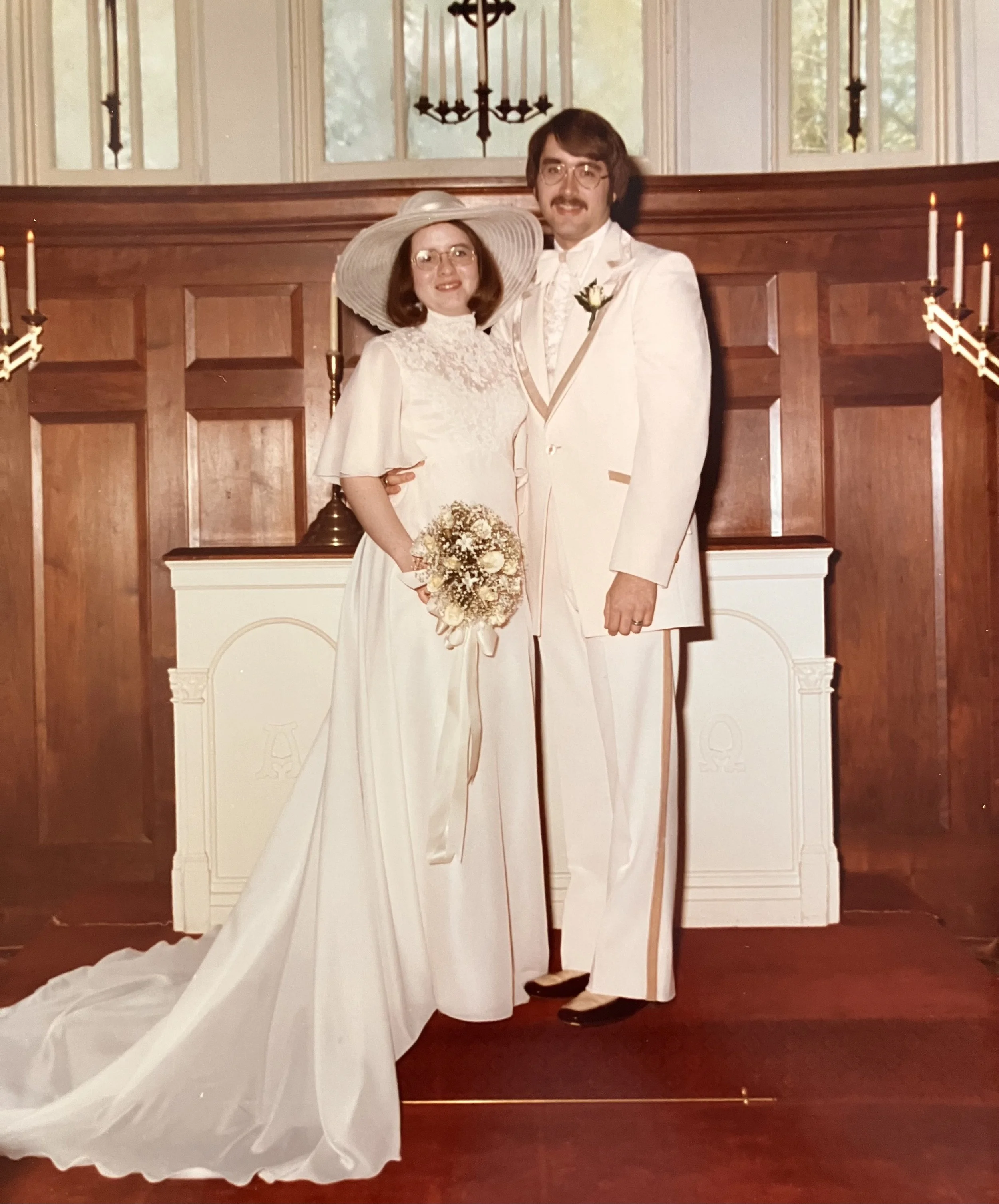
Seriously, fifty years is a long time to spend together, especially when you start out at age 20. I thought I was all grown up then, isn’t that just hilarious? When in fact I did not know how to change a roll of toilet paper. (Really, I didn’t.) I’m sure everyone in the church that day of our wedding didn’t expect it to last – we were two only children, barely more than teenagers, with no real life experience. But I learn fast, and I learn well. Before long I was taking care of not just a hard-working husband, but a house, a yard, a dog, a baby, the household finances, and a part time job here and there.

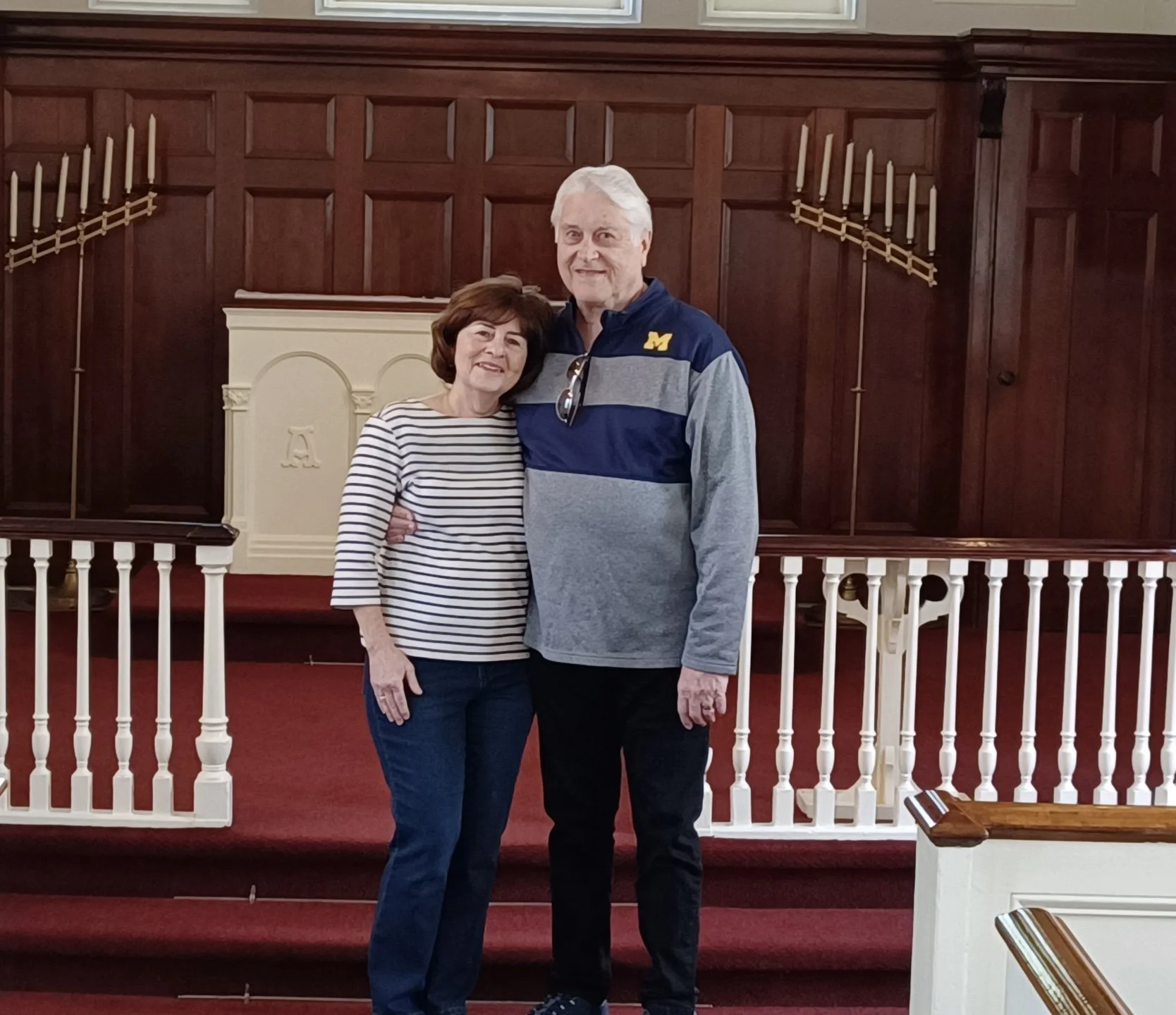
My husband and I were married in a small chapel housed in a historic village near our hometown, a well known destination spot for visitors and school groups. Each year we make a pilgrimage back to the chapel on our anniversary. We worm our way past the tourists who are listening to the docent’s spiel about all the weddings held here. We usually find a way to insert our story, whereupon they happily invite us past the retaining cord and up to the altar and obligingly take our photo. Sometimes the other people visiting will even applaud.

This year our docent was thrilled to have only his second 50th anniversary couple “return to scene of the crime,” as he put it. He shooed all the school children out (they clearly weren’t very interested anyway) and even closed the doors so we could spend as long as we wanted. He asked the whole story of our day – we told him we were late getting started because the couple ahead of us had a fight and almost called the whole thing off. He shared the particulars of the other 50th anniversary couple he hosted last year…the ones who came in with their wedding album, containing photos of the bride in her muslin dress with flowers in her hair, and the groom with a waist length pony tail and a denim tuxedo.

It was fun and heartwarming.

Fifty years is a long time. I felt the enormity of it in ways I didn’t expect. It was made all the more poignant I’m sure by the fact that my husband has stage four chronic kidney disease and is now on a transplant list. We feel blessed by the grace of his relative good health at this stage of disease, knowing it is otherwise for many in his condition. We are living each precious day as it comes, taking care to do the things we most enjoy for as long as we can enjoy them. They are small and simple because we like them that way.

  ~~~~~

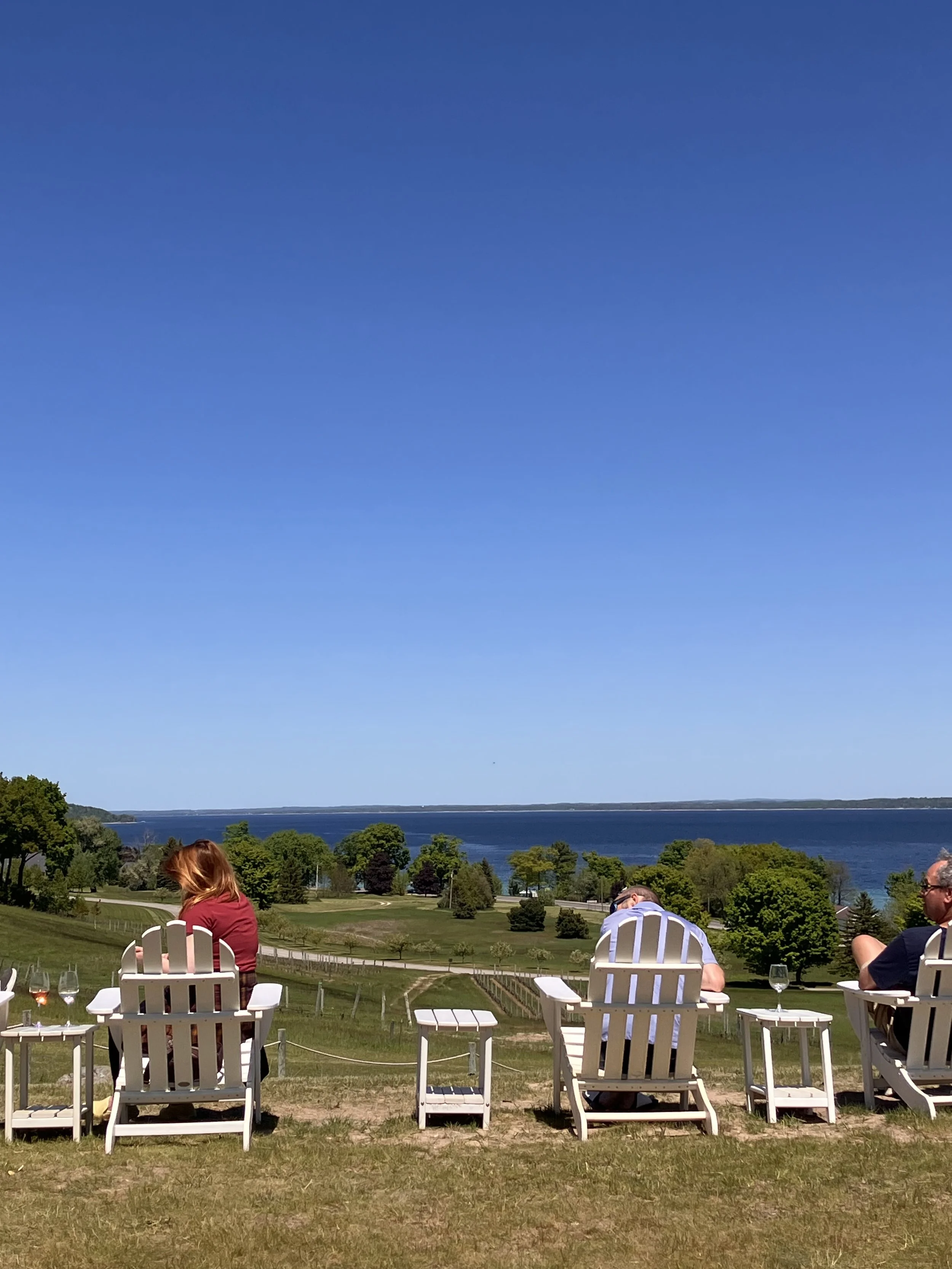
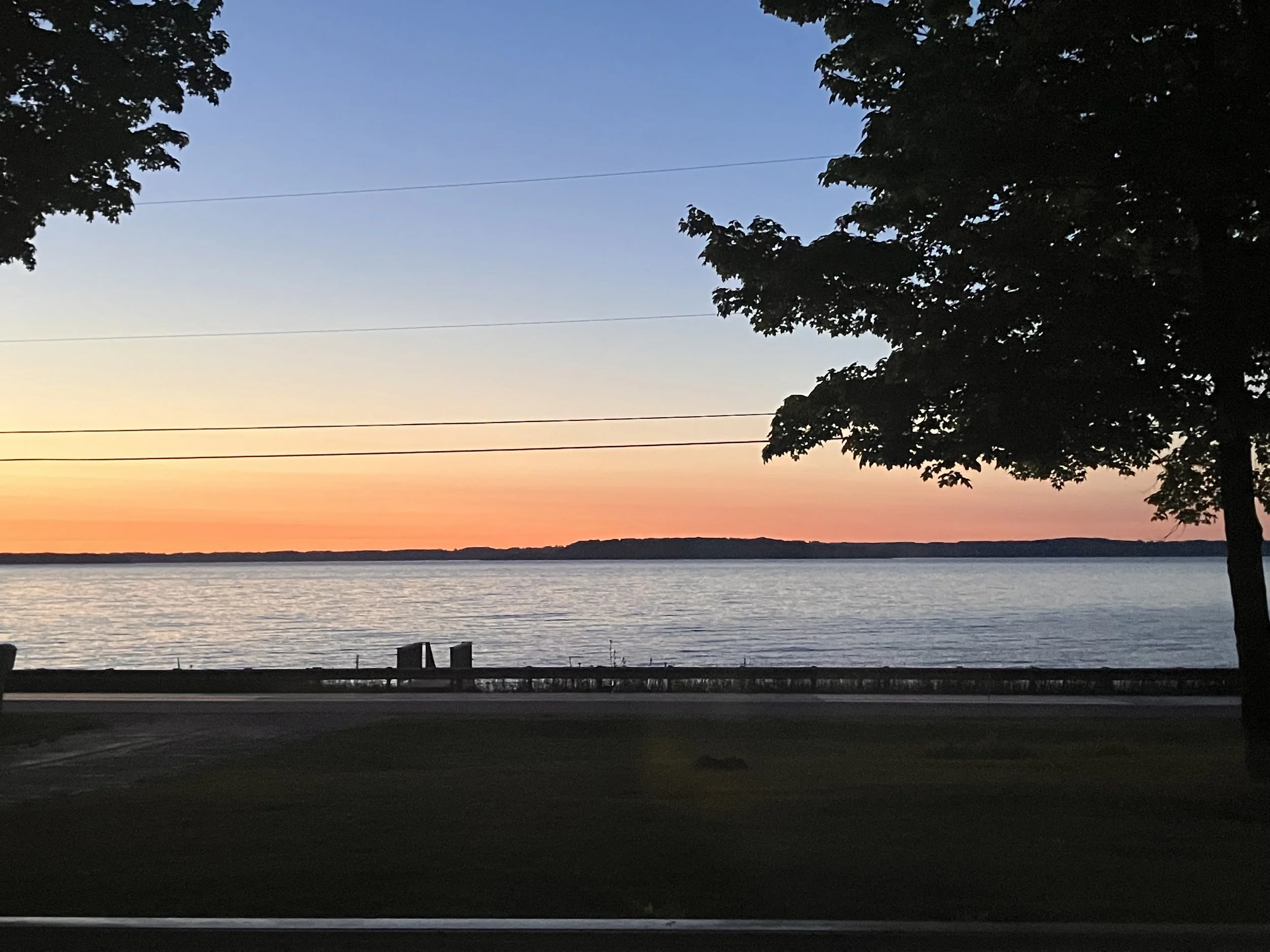
As part of our celebration this month, we took a few days and drove to Traverse City, Michigan, the area of our state that’s known fondly as Up North. It’s a gorgeous spot, right on the shore of Lake Michigan, and our rental house overlooked the west bay. It’s also wine country, so we drove around visiting several lovely vineyards. The weather was picture perfect every single day. How about that for luck? We sat outside at each of these places, sipping wine, looking at the water, feeling the sun just-right-warm on our faces. We relaxed a lot. (Yes, even I relaxed.) This past week was technically before the start of tourist season, so it was much quieter overall in town than it will be a couple of weeks from now – which is of course why we chose to go when we did. I had none of my customary homesickness; savored the lack of hustle-bustle that seems to have exploded around here in our once sleepy little town; and was grateful for the many signs and symbols (literally) on display of a citizenry that values democracy as much as we do.

Still, it’s always wonderful to be home again - to a freshly planted flower garden; my friends and neighbors; to familiar spaces, dear objects, and routines/rituals. I’ve just come inside from giving all the plants a good watering, feeding, and pruning, and having my second cup of a coffee in this pretty new cup, splurging on a bit of French vanilla creamer to sweeten it up.

~~~~~

 I admit, reading got short shrift in May. But that’s okay. There’s no timetable anymore, I read what and when I like – in fact, that’s something of my philosophy of life at this season. Before I engage in anything, say yes to anything, I ponder  - is this something I want to spend on precious time on in what’s left of my wild and precious life? There is much more discernment these days about what I’m willing to do and for what reason I’m doing it. It’s a very empowering feeling, really.

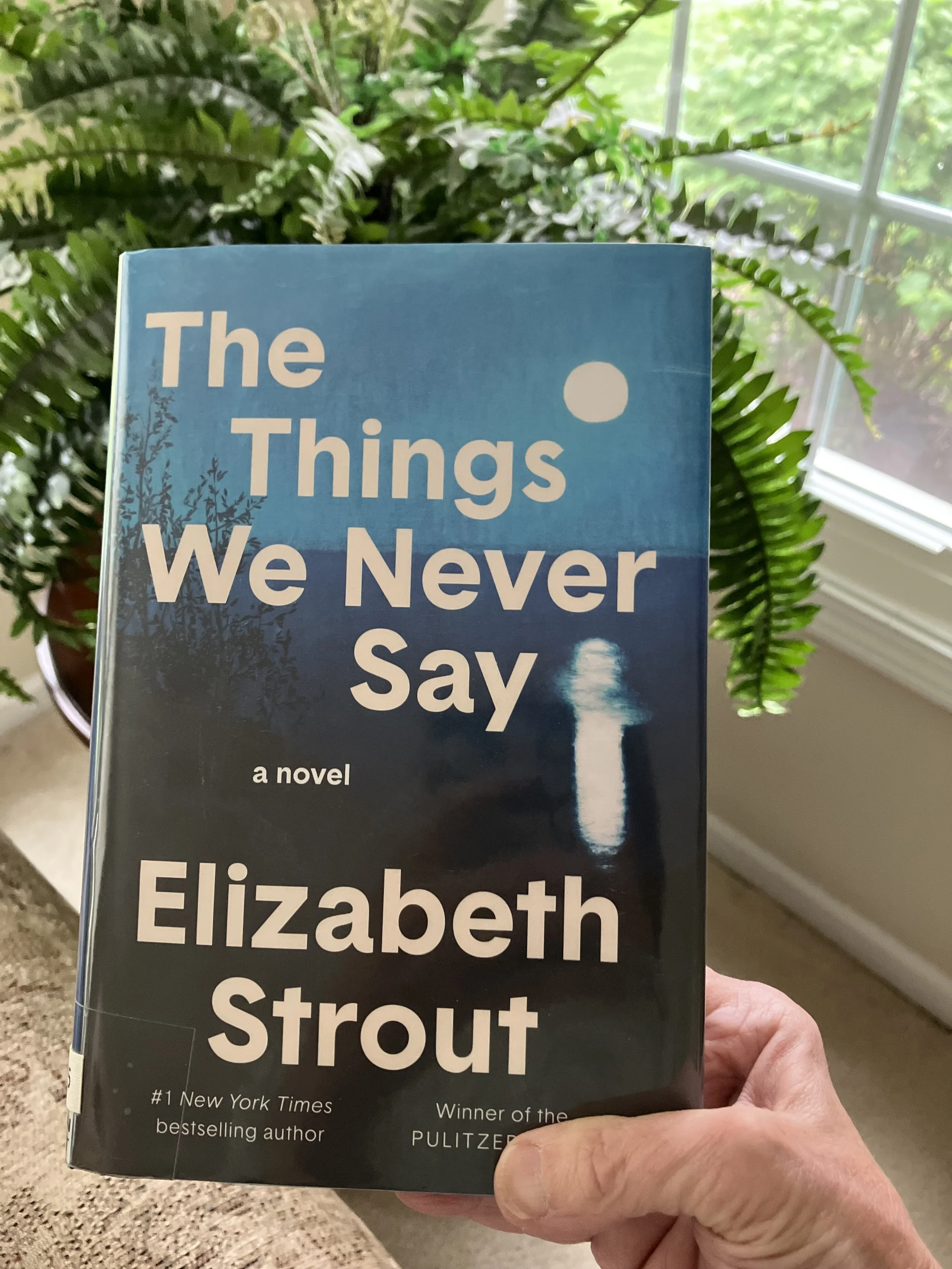
Favorite fiction this month was Elizabeth Strout’s gorgeous new novel, The Things We Never Say. The novel focuses on high school teacher, Artie Dam, and grapples with themes of lonliness, grief, isolation, and the secrets people keep.

Here’s what I wrote in my reflection journal:

I felt so tender reading this novel, and even recognized myself in Artie in the ways he cares about others; how he’s coming to terms with aging; how he sometimes feels alone even in his closest relationships. How he craves deeper connection with his son, his spouse. The novel is set in very real time;  Artie’s deep sadness about the state of the world in these times and his continual wondering about how to respond feels very familiar. 

Artie Dam - and his last name is significant I believe, because he keeps so much of his feelings bottled up inside – is, like me, trying to hold it all. The beauty, grief, fears of this life at a certain age. Artie thinks that “now, after all these years, he was finally becoming a grown up. That he was finally beginning to understand the multitudinous aspect of people – that they held within themselves a vast, unknowable universe.”

As does Artie. As do I.

And so do you.


Begin Again

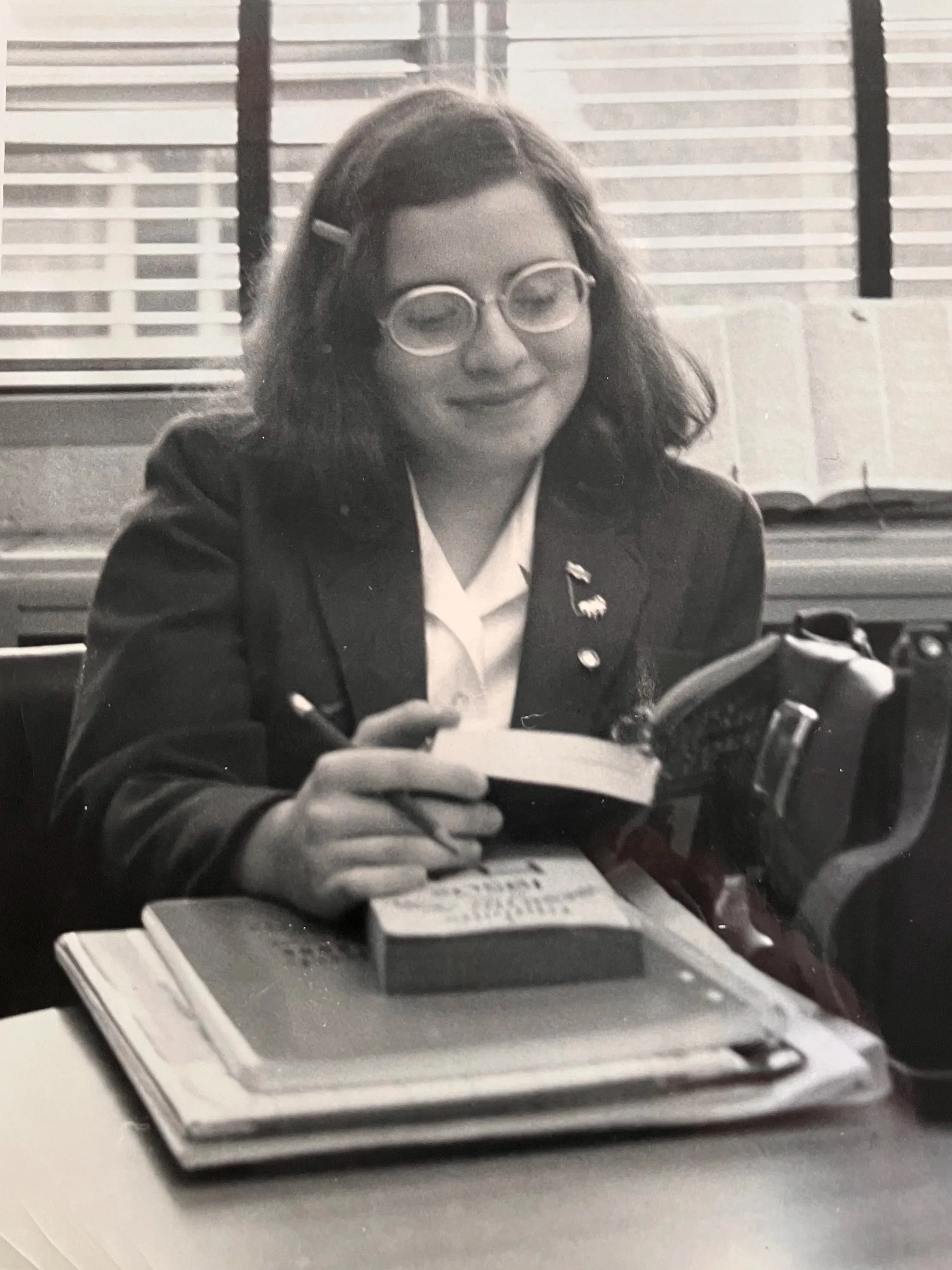
Yesterday, searching through a box of photographs, I happened across one that appeared in my high school yearbook in 1972, and was taken in the school library one afternoon. My 15-year old self at a table, reading with a pencil in hand, a pile of more books and notebooks in front of me. It was a tender recognition; more than 50 years later I still spend some part of each day sitting at a table in my dining room with a stack of notebooks and books in front of me, and a pencil in my hand.

Well, hello you, I thought. There you are.

Here I am, circa 1972, my high school happy place - the library. Wish I could remember the book I was reading!

I returned to writing in this space over a year ago with those same words. Here I am. Ecce Adsum; always finding my way back to words that sustain me, ground me, nourish me, the words that reflect who I am in my bright and shining self.

And so I begin again, grateful for the opportunity to pick up where I left off from my last posting (on April 29, 2025).

~~~~~~~~~~~~~~~~~~~~~~~~~

It’s May 1, 2026. The earth is working mighty hard to come back to life. I have been attempting to walk steadily on my path of simplicity, humility, love, and peace. Seeking beauty, serenity, tenderness. Building a toolkit of practices for the living of these days. Finding solid ground in my communities, my lifeways, and in nourishing my body-mind-soul connections.

What does that look like on a damp, chilly May morning?

~ Drinking my coffee in bed, surrounded by books of poetry, my journals, and my dog curled up asleep beside me.

~A long walk through the neighborhood, paying attention to what might have burst into bloom overnight. Softly reciting aloud the poetry I’ve been memorizing, thinking about a poem I’m playing with, trying to write it.

~Stopping to speak with a neighbor whose husband died last week, offering her space to talk about his last days and her new loneliness. Moving on with a deep gratitude for my own husband waiting for my return.

~Getting a haircut and treating myself to a tiny bottle of perfume oil that smells of coconut. Touching it to my wrist and enjoying the sweet aroma that’s feels like it’s a secret between me, myself and I.

~Baking some pumpkin bread from an ancient recipe, one my mom clipped out of a newspaper decades ago; it’s my husband’s favorite treat with his morning coffee.

~ Planning the afternoon’s trip into our little hometown – taking Lacey along as we pick up her monthly food order from a local pet shop, and then an early dinner at our favorite (dog-friendly!) pub.

~Looking forward to being home by early evening; rain is forecast, and I will sit at the dining room table with a book and a glass of wine.

For me, this is the kind of simple day – the kind of simple life – that feeds my soul and restores me to solid ground, even as the earth around me quakes on a regular basis. To live simply and walk humbly – that is medicine for me. A “power tool” in my toolkit for the living of these days.

~~~~~~~~~~~~

At the start of this year, I began a practice of poetry reading and study that has been such a joy. I focus on one poet for the whole month by immersing myself in their work: reading a single collection, one or two poems a day; finidng interviews or podcasts of the poet talking about and reading their work; and memorizing one or two poems that particularly resonate with me.

In April I read and studied the poet Jane Kenyon, and memorized her poem, Otherwise. You may have read it. It is truly a paeon to the beauty of an ordinary day, made even more precious because we know how rare and fleeting are the times that make this possible, how life could always be “otherwise.”

Kenyon lists the simple movements of her day, much as I have listed mine here, movements that become sacred in their telling. The final stanza is compelling in its poignancy. She writes:

I slept in a bed,

in a room with paintings

on the walls, and

planned another day

just like this day.

But one day, I know,

it will be otherwise.

My intent is to return to this space on the first day of every month. To connect with you for a moment and share the beauty of my ordinary life. To offer you a place to think about the beauty of yours, and share that with me in the comments or an email if you feel moved to do so.

To invite you to gather your own set of tools; practices that nourish you and provide some solid ground for the living of your days right here and right now.

Every day we live, as long as we are on this earth, we get an opportunity to begin again.

Embrace it. Savor it. Stand on it. Do good with it, for yourself and others.

Because one day, it will be otherwise.

My copy of Otherwise, Collected Poems by Jane Kenyon; and my beloved Paper Republic journal


We Could Make This Place Beautiful

Good Bones, by Maggie Smith

Life is short, though I keep this from my children.
Life is short, and I’ve shortened mine
in a thousand delicious, ill-advised ways,
a thousand deliciously ill-advised ways
I’ll keep from my children. The world is at least
fifty percent terrible, and that’s a conservative
estimate, though I keep this from my children.
For every bird there is a stone thrown at a bird.
For every loved child, a child broken, bagged,
sunk in a lake. Life is short and the world
is at least half terrible, and for every kind
stranger, there is one who would break you,
though I keep this from my children. I am trying
to sell them the world. Any decent realtor,
walking you through a real shithole, chirps on
about good bones: This place could be beautiful,
right? You could make this place beautiful.


The thing about paying attention to beauty is that once you begin to yearn for it you long for it more and more. You become adept at putting yourself in the way of it, knowing where it meets you in the course of an ordinary day. Like me and the sky. Or my morning coffee. Or taking a walk. Tending my garden.

But then a time will come when the places we live and move and have our being are very much less than beautiful. As Maggie Smith writes in her poem, Good Bones, “The world is at least fifty percent terrible, and that’s a conservative estimate.”

We each have our own sufferings and the circle of suffering changes as time goes on.

Contrary to popular belief and the news we see on our phones, we don’t have to drown in the despair of that fifty percent.

But wherever we are we can make space for beauty, for goodness in the living of our days. To believe this from the depth of your soul is to have good bones. To have a foundation on which to construct a beautiful life, even if it is seemingly small and deceptively simple.

If the world were a house right now, we’d have to disclose the fact that it was a real fixer-upper. Maybe we have to go to extremes, have to gut it to expose those good bones supposedly lying in wait. But we can do that. We can tear down all this ugliness and build something fresh and strong and steady. Something that enfolds us in love and care and goodness.

If the world is fifty percent terrible, that means it’s fifty percent beautiful. Right now I see a long line of strong beautiful people. They’re making food for thousands of war and climate refugees; there are those right in the midst of disaster and desolation, unloading trucks of supplies, cooking, serving in the hot sun or the pouring rain, meeting people completely enfolded in pain and suffering. They offer nourishment in the form of a hot bowl of soup, some bread, a kind word and a smile. Continents and oceans away are more people packing up trucks, shipping containers, boats. Still more are working in offices or online, ordering, keeping track of what goes where and how much. Still others all over the globe posting photos, asking for helpers, volunteers, patrons. And even more (like me, sitting in their own comfortable homes) sending money so that all this can begin to happen.

This long chain of goodness is just a fraction of a percent of the beauty we can see. The beauty we can be.

Every act done in love, with the intention of building a foundation of care and healing and community – those are the ways we make this place beautiful. I know you know this.

What I want to say to you is this: When you feel afraid that the foundation will not hold, that the walls will crumble and the roof will come crashing down on this place you call home, then look for something you can make beautiful. Maybe it’s something as small as taking a plate of home baked cookies to an elderly neighbor, staying to talk with her a while, even though she has dementia and asks you the same question at least ten times. Maybe it’s pledging a monthly commitment of money to an organization fighting to improve the lives of _____________. (There are many ways to fill in that blank.)

Maybe it’s even bigger, like teaching English as a second language, running for office in your community, volunteering your expertise in a disaster relief zone.

“When faced with evil we have two choices: we can build a wall or we can make something beautiful,” writes Sarah Clarkson in her book, This Beautiful Truth.

What I want to say to you is this: It all matters. It all counts. Because as Maggie Smith wrote in her poem: We can make this place beautiful.